
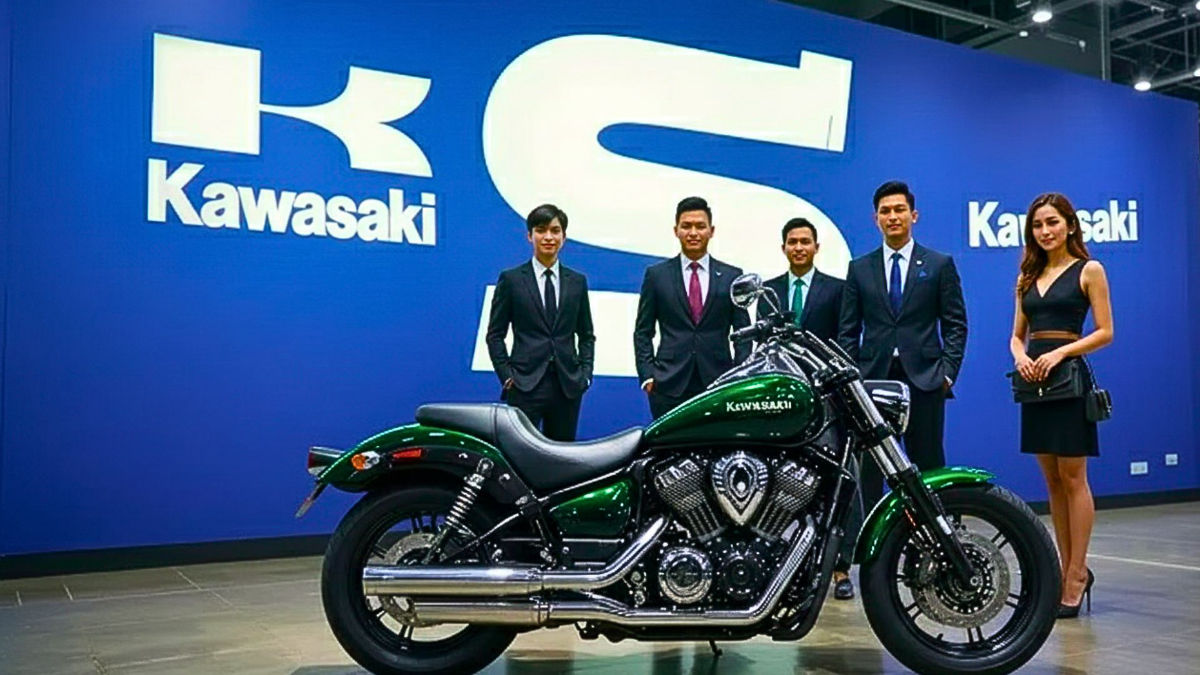
Imagine twisting the throttle on a bike that feels like it was built just for you – not too heavy, not too wild, but with enough grunt to make your pulse quicken on an open highway. That’s the magic of the 2026 Kawasaki Vulcan S, Kawasaki’s pint-sized powerhouse that’s shaking up the cruiser world. As we roll into 2026, this mid-size marvel returns with subtle yet game-changing updates: a refreshed design for better flow, enhanced comfort for all-day rides, and a brand-new TFT display with Bluetooth connectivity. Whether you’re a newbie dipping toes into two-wheeled freedom or a seasoned rider craving urban agility, the Vulcan S delivers without the cruiser clichés.
Table of Contents
Price Expected
Launched globally with fanfare – including a fresh debut in India at ₹8.13 lakh (around $9,700 USD) – the 2026 model builds on the Vulcan S’s legacy since its 2015 debut. Back then, it disrupted the segment by borrowing the peppy 649cc parallel-twin from the Ninja 650, ditching the typical V-twin rumble for smooth, responsive torque. Fast-forward to today, and it’s E20 fuel compliant for eco-conscious riders, proving Kawasaki’s commitment to blending performance with practicality.
Performance and Engine
At its heart beats a 649cc liquid-cooled, DOHC parallel-twin engine, tuned for low-end punch that shines in city traffic or canyon carves. It churns 60 horsepower at 7,500 rpm and 46.5 lb-ft of torque at 6,600 rpm – figures that translate to a top speed north of 115 mph and 0-60 in under 5 seconds. Dual 38mm throttle bodies with sub-throttle valves ensure linear power delivery, while the Economical Riding Indicator lights up for those fuel-sipping sprints (expect 45-50 mpg). Paired with a slick 6-speed gearbox, it’s a torque monster disguised as a laid-back cruiser.
Features
What sets the Vulcan S apart? The ERGO-FIT system. This isn’t gimmicky – it’s 18 customizable setups for handlebars, seats, and footpegs, letting riders from 5’2″ to 6’3″ (and beyond) dial in their perfect posture. Taller folks like me (6’1″, 220 lbs) love the extended-reach options for upright comfort on long hauls; shorter pilots rave about the low 27.8-inch seat height for flat-footing at stops. New for 2026, the TFT instrument panel integrates Bluetooth for phone pairing, navigation, and music – a nod to tech-savvy millennials trading Harleys for hybrids.
Safety Brakes
Handling-wise, it’s no slouch. At 498 pounds wet, the Vulcan S flicks through corners with surprising eagerness, thanks to an 18-inch front wheel shod in Dunlop Sportmax D220 rubber and a 17-inch rear. Front suspension is a 41mm telescopic fork with 5.1 inches of travel; the rear twin shocks offer 3.1 inches with preload adjustability. Brakes are solid: dual 300mm front discs with two-piston calipers and a 250mm rear single-piston setup (ABS standard on most trims). Riders on forums like Reddit call it “a top pick for bigger builds,” praising its stability at 90 mph without vibes.
| Key 2026 Kawasaki Vulcan S Specs | Details |
|---|---|
| Engine | 649cc liquid-cooled parallel-twin, DOHC, 60 hp @ 7,500 rpm |
| Torque | 46.5 lb-ft @ 6,600 rpm |
| Transmission | 6-speed, return shift |
| Suspension (F/R) | 41mm telescopic fork / Twin shocks, preload adjustable |
| Brakes (F/R) | Dual 300mm discs / 250mm disc (ABS available) |
| Tires (F/R) | 120/70-18 / 160/60-17 |
| Wheelbase | 62 inches |
| Fuel Capacity | 3.8 gallons |
| Weight (Wet) | 498 lbs |
| Seat Height | 27.8 inches |
| MSRP (US Est.) | $7,899 (base) |
Final Verdicts
In a sea of cookie-cutter cruisers, the 2026 Kawasaki Vulcan S stands tall – or low, really – as the thinking rider’s choice. It’s not about emulating icons; it’s about carving your path. Ready to ERGO your ride? Swing by a dealer and feel the Vulcan vibe. Your next adventure awaits.
ThanK You