
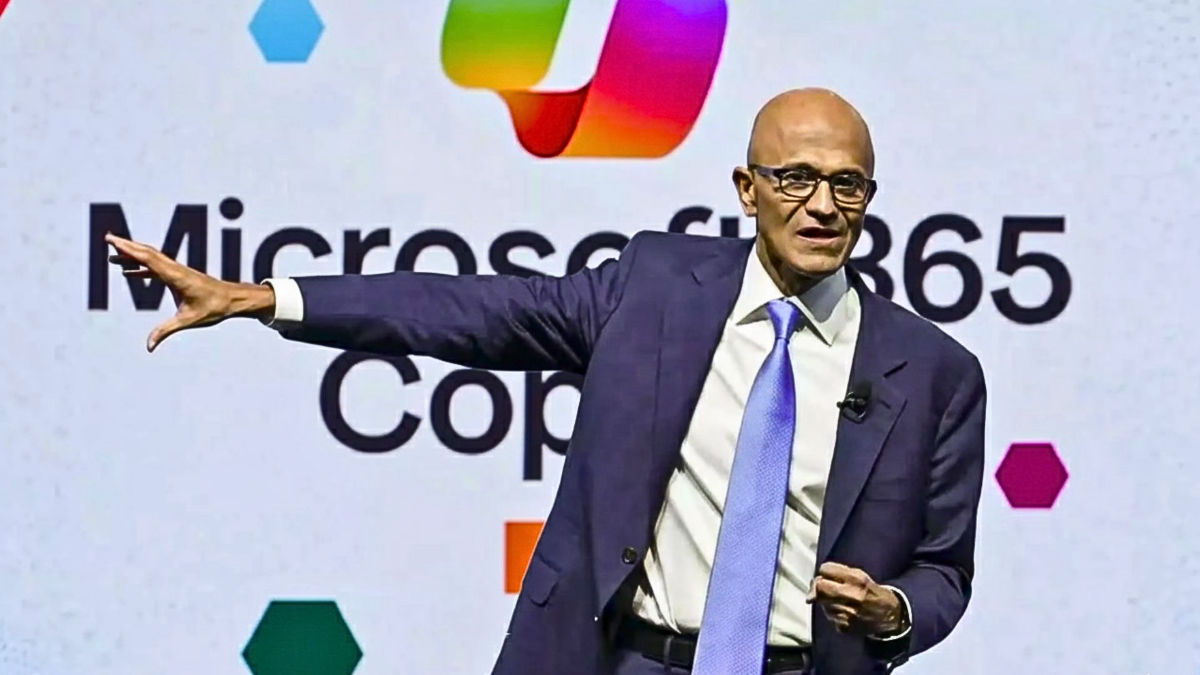
Microsoft CEO Satya Nadella has started a personal blog that is already generating discussion in a tech industry that is buzzing with advances in artificial intelligence. His first post on “sn scratchpad,” titled “Looking Ahead to 2026,” delves deeply into the controversial topic of “AI slop”—those mediocre, frequently error-prone outputs that flood the digital landscape from generative AI tools. Nadella’s remarks, which were published a few days ago on December 29, 2025, feel relevant as we begin 2026 and call on the industry to move past the stigma associated with slop.
Table of Contents
What Exactly Is AI Slop, and Why Does It Matter?
Coined in online forums and tech critiques, “AI slop” refers to the low-quality, generic content churned out by large language models—think bland blog fillers, hallucinated facts, or cookie-cutter images that lack soul. Critics argue it’s diluting the internet, with platforms like Reddit and X (formerly Twitter) rife with debates on its proliferation. As AI integrates deeper into daily workflows, from Copilot in Microsoft Office to ChatGPT queries, the risk of “slop” undermining trust grows. Nadella acknowledges this head-on, but he’s not here to dwell on the negatives.
Nadella’s Vision: From Slop to Cognitive Amplifiers
“We need to get beyond the arguments of slop vs sophistication,” Nadella writes, calling for a “new equilibrium in our ‘theory of the mind’ that accounts for humans being equipped with these new cognitive amplifier tools.” He reframes AI not as a replacement for human ingenuity but as a “scaffolding for human potential”—evolving Steve Jobs’ “bicycle for the mind” metaphor into something more dynamic. Imagine AI as an extension of your brain, amplifying creativity rather than automating mediocrity.
This is not merely philosophical gibberish. Nadella cites Microsoft’s shift to integrated systems from standalone models. He believes that by 2026, AI agents will be able to seamlessly coordinate a variety of tools to address “jagged” real-world issues like personalized education or climate modeling. “When it comes to deploying AI for real world impact, we will evolve from models to systems,” he claims. It’s a reference to ongoing Microsoft projects that promise safer, more dependable results, such as Azure AI’s agentic workflows.
The Broader Implications for AI in 2026
Nadella’s post arrives amid a pivotal year for AI diffusion. After the “spectacle” of early demos—like viral deepfakes or infinite cat videos—the focus is on “substance.” He warns that for AI to gain “societal permission,” it must deliver measurable impact on global challenges, from healthcare disparities to sustainable energy. This echoes industry calls for ethical guardrails, with Microsoft leading investments in responsible AI.
Yet, Nadella’s optimism is tempered. He highlights the need for collective action: developers, policymakers, and users must collaborate to ensure AI empowers rather than erodes. “This is what I hope we will collectively push for in ‘26 and beyond,” he concludes. As competitors like OpenAI and Google race ahead, Microsoft’s emphasis on systems over hype positions it as a steady hand in the AI race.
Why Nadella’s Blog Matters Now
In an era where AI slop debates dominate headlines, Nadella’s voice cuts through the noise. His “sn scratchpad” isn’t just a CEO’s musings—it’s a manifesto for thoughtful AI adoption. For businesses eyeing Microsoft 365 Copilot or developers building on GitHub Copilot, this signals a future where AI enhances, not hinders, productivity.
Nadella’s remarks pose a challenge to us as we navigate 2026: Will we use AI as a true amplifier or let it define the narrative? Since its launch, the blog has sparked conversations on tech forums and LinkedIn, demonstrating its popularity. Read the entire article and participate in the discussion because substance will always triumph over spectacle in AI’s next phase.