
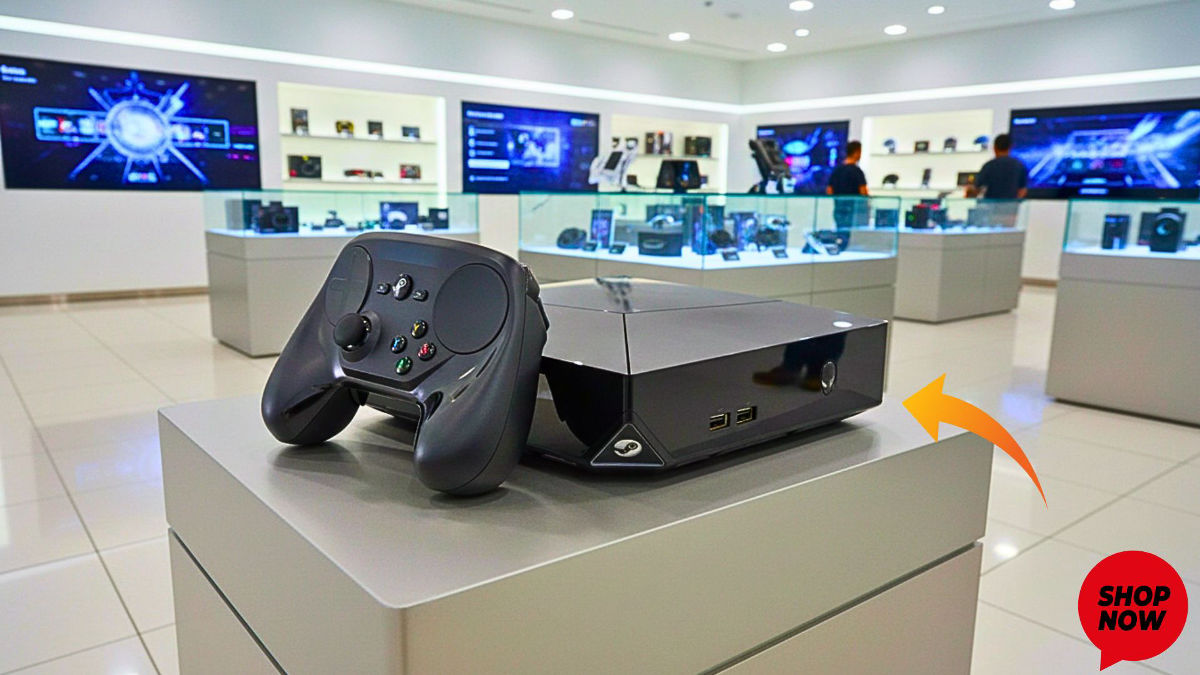
Steam Machine gaming is back in the spotlight in 2025, marking a revival of Valve’s ambitious attempt to merge the power of PC gaming with the simplicity of consoles. With renewed interest in open-source gaming, compact hardware, and the massive success of the Steam Deck, the Steam Machine concept has evolved into a formidable player in the modern gaming ecosystem.
The Return of the Steam Machine Concept
The concept was innovative when Valve first unveiled Steam Machines in 2015. These small PCs, which offer performance and flexibility far beyond those of traditional consoles, were created to bring the extensive Steam library into the living room. However, a small ecosystem and uneven hardware standards kept them from becoming widely used.
By 2025, things have changed significantly. The popularity of SteamOS 3.0 and the success of the Steam Deck have rekindled interest in gaming PCs for living rooms. These days, manufacturers like ASUS, MSI, and Zotac are creating updated Steam machines that are more compact, powerful, and precisely calibrated for the demands of contemporary gaming.
SteamOS 3.0: The Backbone of Modern Steam Machines
SteamOS 3.0, a Linux-based operating system that offers a console-like interface, smooth updates, and native support for thousands of PC games, is at the center of this comeback. Proton, a compatibility layer created by Valve, has made it possible for Windows-only games to run flawlessly on Linux, removing one of the main issues from the past.
Similar to the latest PlayStation and Xbox consoles, SteamOS 3.0 also offers enhanced controller integration, better power management, and instant resume functionality. The modern Steam Machine provides a plug-and-play experience without sacrificing the depth of PC gaming, thanks to its faster SSDs and sophisticated GPUs.
Hardware Innovations Driving the Comeback
The most recent generation of steam machines uses small, thermally efficient enclosures to harness the power of NVIDIA RTX 40-series GPUs and AMD Ryzen AI chips. Even at 4K resolution, these systems are built to run quietly, with low latency and high frame rates. Both die-hard gamers and fans of home entertainment will find some high-end models appealing due to their integrated liquid cooling and RGB aesthetic customization.
Furthermore, because these systems are modular, users can upgrade storage, RAM, or even GPU units, which is not possible with consoles. Modern Steam machines are the ideal compromise for gamers who desire convenience and customization because of their power and flexibility.
Steam Machines vs. Consoles in 2025
Steam machines provide a welcome change from the PlayStation 6 and Xbox Next, which are currently making headlines. They have no subscription restrictions, support thousands of independent and AAA games, and work flawlessly with PC add-ons like VR headsets and racing wheels. Furthermore, they are far more flexible than any console due to their access to productivity apps, emulators, and streaming platforms.
In terms of cost, entry-level Steam machines now start at about $499, which puts them on par with popular consoles while, in many situations, providing better performance.
The Future of Steam Machine Gaming
As Valve continues refining SteamOS and expanding its ecosystem, the Steam Machine is poised for long-term success. The growing demand for open gaming platforms, combined with the rise of cloud saves and cross-platform play, strengthens its position as the bridge between console and PC gaming.
In 2025, Steam Machine gaming is no longer an experimental concept—it’s a powerful, flexible, and user-friendly solution redefining how gamers experience PC power from the comfort of their couch.